

Mahadji Shinde, the Great Maratha, the greatest ruler ever of the Scindia dynasty, who expanded his kingdom, routed the Rohillas and was one of the most powerful Maratha rulers in the North.

The 3rd Battle of Panipat, had dealt one of the worst blows ever to the Maratha empire, Balaji Baji Rao, the Peshwa, could not recover from the debacle and died broken hearted in the very city of Pune, that he so lovingly built. The Marathas lost the entire Northern territories of India from Delhi onwards, and the empire ran up into huge debts.
It was at such a critical juncture that Madhavrao I, became the Peshwa on June 23, 1761, at a very young age of 16. Due to his rather young age, his uncle Raghunathrao was appointed as his regent to assist him in the administrative affairs.
Madhavrao I managed to bring the administration back into track, and also secured the treasury that was being looted. He had the unenviable task of rebuilding the Maratha Empire that had suffered a body blow, after Panipat and setting right the rot in the administration.
Madhavrao I’s reign however would be remembered for the creation of the semi autonomous Maratha states in the Deccan and the North, it was a tactical decision to keep the Maratha empire intact.While the Peshwas ruled over Pune, in the Western part of India, Pilaji Rao Gaekwad captured Baroda from the Mughals in 1721, leading to the establishment of the Gaekwad dynasty there.
The Peshwa authority by now had considerably eroded post Panipat, and the semi autonomous dynasties like the Gaekwads began to assert themselves even more. In Maharasthra itself, the Bhonsle’s established semi autonomous fiefs at Nagpur, Satara and Kolhapur, while smaller semi autonomous provinces like Dhar, Sangli, Aundh etc sprang up. In Indore, Malhar Rao Holkar founded the Holkar dynasty, that would be a powerful kingdom on it’s own.
And in Ujjain, one of the holy cities of Hinduism, one of the 12 Jyotirlinga Kshetras,Ranoji Shinde, a Kunbi shilledar and the village Patil of Kannerkheda near Satara who rose under Peshwa Baji Rao I during the Malwa campaign of 1723, would found one of the most powerful kingdoms of Central India.
The Scindias, like the Gaekwads of Baroda, came from the Kunbi peasant community, traditionally cultivators, but also the backbone of Shivaji Maharaj’s Mavalas (mountain infantry). Their martial service under Bahmani and later Maratha leadership gave rise to surnames like Shinde and Gaekwad.
The greatest of the Scindia rulers, would however be Ranoji’s illegitimate son, his youngest one, Mahadji Scindia. None of Ranoji’s immediate successors, had a distinguished reign, Jayappaaji Rao was killed in a clash with the Maharaja of Jodhpur, after he got involved in their internal affairs.
While Jankoji Scindia, took part in the disastrous battle at Panipat, and was killed by Bakhurdhar Khan, after being taken prisoner by him.For two years, the dynasty had no clear leader, a vacuum that reflected the Maratha collapse after Panipat. While Kadarji Rao Scindia (brief tenure) was apppointed to stabilize matters, helacked distinction.
Into this fractured legacy stepped Mahadji Scindia, his rise was dramatic, from obscurity to becoming the most powerful Maratha in the North, the one who restored Scindia prestige and effectively controlled Delhi politics
It was not an easy ascent to power for Mahadji Scindia, Jayappa’s widow Sakhubhai, wanted her own lineage to continue. While Raghunath Rao, the Peshwa’s uncle, tried to sideline him, by promoting his nephew Kedarji Rao. However Kedarji Rao refused to be part of his uncle’s evil plans, out of respect to Mahadji.
Gwalior at that time, was under the Jat ruler of Gohad, and the Marathas had planned a long siege in 1767. However instead of conflict, Mahadji negotiated a settlement between the Marathas and Jats, an act of diplomacy that impressed the young Peshwa Madhavrao, who was keen on stabilizing Maratha fortunes after Panipat.
After consultations with Nana Fadnavis, Malhar Rao Holkar, and Haripant Phadke, Madhavrao declared Mahadji the rightful Scindia ruler in 1768. This was the moment Mahadji transitioned from contested claimant to legitimate dynast, setting the stage for his later dominance in North India.
At just 25, Mahadji seized Mathura from the Jats an early indicator of his prowess. His devotion to Shri Krishna shone through, he rebuilt temples and founded a Sanskrit school, blending martial power with cultural patronage. Fluent in both Sanskrit and Persian, he embodied the ideal ruler who was as comfortable in the battlefield as in the court or temple.
He was also one of the few Maratha leaders who survived the rout at Panipat in 1761, where he was pulled to safety by a water carrier named Rane Khan, who in turn would become one of his close aides later.
In 1772, Mahadji escorted the Mughal emperor Shah Alam II back to Delhi after years of wandering. Out of gratitude, Shah Alam appointed him Vakil-ul-Mutlaq (honorary regent), effectively making Mahadji the emperor’s chief representative, giving him immense prestige and legitimacy in North India.
Meanwhile the death of the young Peshwa Madhav Rao I in 1772, destabilized the Maratha confederacy, as the ambitious Raghunath Rao, egged on by his wife Anandi Bai, murdered his own nephew Narayan Rao,the rightful heir, plunging the Marathas into chaos, with factions forming around Raghunath Rao’s claim.
To counter Raghunath’s usurpation, Nana Fadnavis formed the Barabhai council,a coalition of twelve Maratha chiefs. As one of the twelve, Mahadji lent his weight to the council, strengthening its legitimacy. Raghunath Rao was deposed, and Sawai Madhav Rao (Madhav Rao II), the infant son of Narayan Rao, was installed as Peshwa under the council’s regency.
Seeking to reclaim the Peshwa’s throne, Raghoba turned to the British for support. The Barabhai council, with Mahadji as a key member, opposed this foreign interference, setting the stage for the first Anglo-Maratha War.
Mahadji routed the British at Wadgaon in 1779, encircling their forces, cutting off their supplies and retreat routes. Forcing them to sue for peace, as the British agreed not to support Raghoba and surrendered territories around Bombay.
However the then Governor-General Warren Hastings refused to honor the treaty, starting the conflict once more. Captain Goddard captured Ahmedabad and advanced into Gujarat, while Captain Popham in the North seized Gwalior Fort in 1780, a major blow to the Marathas. Though Mahadji counter attacked fiercely, the conflict turned out to be a stalemate, with neither side gaining nor losing.
This led to the Treaty of Salbai in 1782, that transformed Mahadji Scindia from a loyal Maratha commander into an independent sovereign power. The British ceased all support to Raghoba, ending his bid for the Peshwa’s throne and pensioned him off. Sawai Madhav Rao II, the infant Peshwa was recognized as the rightful ruler of the Maratha confederacy. And above all, Mahadji was no longer a vassal of the Peshwa. He was acknowledged as the legitimate ruler of the northern territories, while the Peshwa retained authority over the Deccan.
However this sparked off a long rivalry with Nana Fadnavis, wary of Mahadji’s growing stature. He feared Mahadji’s northern empire would overshadow the Peshwa’s authority in Pune. Their mutual distrust saw both maneuvering to check each other’s influence.
Mahadji’s later years were marked not only by his battles with the British but also by intense rivalries within the Maratha confederacy itself, especially with the Holkars. The Scindias and Holkars had clashed since the Rajputana campaigns, often backing rival factions among the Rajput rulers .To check Mahadji’s growing northern influence, Fadnavis dispatched Tukoji Holkar and Ali Bahadur (the grandson of Baji Rao I and Mastani) to undermine him.
Mahadji decisively defeated Tukoji Holkar at Lakheri in 1793, reaffirming his supremacy in the North.Though unsuccessful against Mahadji, Ali Bahadur later carved out his own principality in Banda, Bundelkhand, establishing a new Maratha offshoot.
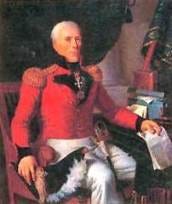
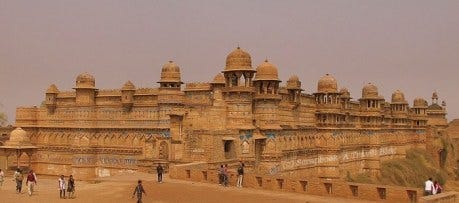
By the 1780s and 1790s, Mahadji Scindia had transformed himself into the undisputed master of North India. He wrested Gwalior in 1783 from the Jat ruler Chattar Singh, as it became the Scindia capital and symbol of Mahadji’s authority. With the help of Benoît de Boigne, a French commander, Mahadji built a disciplined, professional force trained on European lines. This gave him a decisive edge over both Indian rivals and the British.
He surrounded himself with loyal and capable lieutenants like Ambuji Ingle, a key strategist, Rane Khan, the water carrier who saved his life at Panipat, Rayali Patil, Jivbadada Baksh, Ladoj Deshmukh, commanders who ensured his military machine ran smoothly.
When Shah Alam II, was deposed and blinded by Ghulam Qadir, the Rohilla chief in 1788, Mahadji rushed to Delhi, routed the Rohillas, and restored Shah Alam II to the throne. His raids struck terror among the Rohillas, culminating in the sack of their capital.
By the 1790s, Mahadji Scindia had reached the zenith of his power, commanding respect across India as both warrior and statesman. He crushed the combined armies of Jaipur and Jodhpur at Patan in 1790, a decisive victory that showcased his European-trained forces under Benoît de Boigne. The Battle of Merta, followed soon after, forcing the Rathores to cede Ajmer, a prized Rajput stronghold, to Scindia control.He restricted the Nizam’s influence to the Deccan, curbing their northern ambitions.
After the Third Anglo-Mysore War, Tipu was compelled to sue for peace, further demonstrating Mahadji’s reach and influence.Despite his rivalry with Nana Fadnavis, Mahadji remained steadfastly loyal to the Peshwa, never challenging Pune’s legitimacy.rough the mediation of his friend Haripant Phadke, a truce was brokered between Scindia and Fadnavis, easing tensions within the Maratha confederacy.
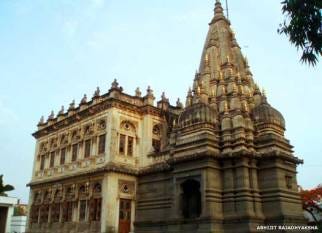
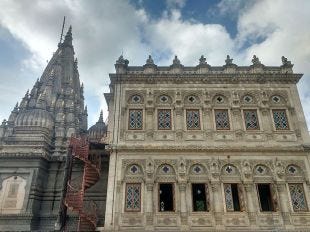
Mahadji Scindia’s saga closes with a fittingly grand memorial. He passed away at Wanwadi near Pune on February 12, 1794, and in his honor, a magnificent chhatri was built there. A three-storied structure in classic Rajput style, blending elegance with martial grandeur, housing a Shiva temple alongside the memorial, symbolizing Mahadji’s devotion and the spiritual legitimacy of his rule.
It stands not just as a tomb but as a monument to his transformation, from illegitimate son to savior of the Mughal throne, conqueror of Rajputana, and architect of Maratha resurgence in the North.
Had Mahadji Shinde marched on to Bombay right after the victory at Wadgaon, Marathi would have been India's language. I am writing a series whereby I imagine what would have happened if Mahadji had Chanakya to advise him for a couple hours after the victory at Wadgaon
https://olebilebamalete.substack.com/p/wadgaon