
Mahanandi

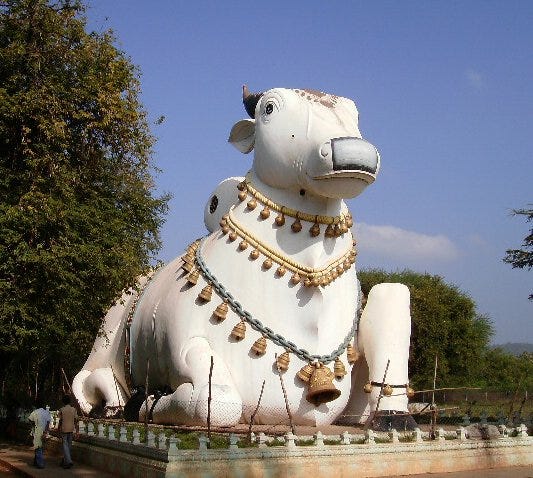
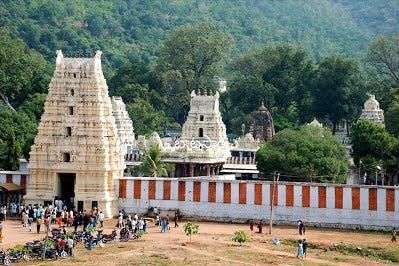
Mahanandi is indeed a jewel nestled in the Nallamalla hills, and its sanctity is magnified by the presence of the massive Nandi at the Mahanandisvara temple. What makes it even more remarkable is that this temple is one of the Nava Nandis, a constellation of nine Nandi shrines within a 15 km radius, each around 1500 years old.
The Nava Nandis here are
Mahanandi – the central and most prominent shrine.
Sivanandi – dedicated to Shiva’s aspect.
Vinayakanandi – a rare blend, linking Nandi with Ganapati.
Somanandi – associated with Soma, the moon god.
Prathamanandi – considered the first among the nine.
Garudanandi – uniquely tied to Garuda, Vishnu’s vahana.
Suryanandi – linked to Surya, the sun god.
Krishnanandi (Vishnunandi) – associated with Vishnu/Krishna.
Naganandi – tied to serpent worship and naga symbolism.
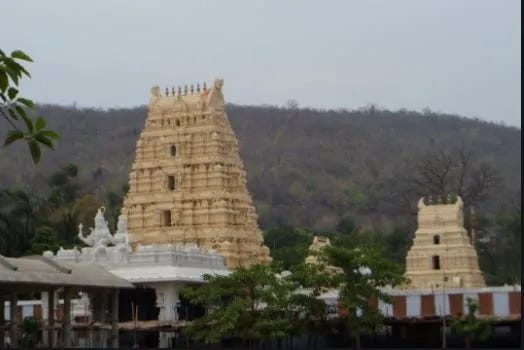
All nine Nandi temples cluster around Nandyala, whose very name comes from Nandi Alaya, “the abode of Nandi.” Mahanandi, about 21 km away, is the most prominent among them. It is famous for it’s Pushkarnis, two of which lie outside the temple, but the largest one,about 60 sq ft, is inside, with a mandapam at its center. This tank is not just architectural but deeply symbolic: a sacred pool at the heart of worship.
The water flows directly from beneath the Garbhagruha, just below the Swayambhu Shiva Linga, and is always fresh, pure, and cool, never runs dr, even in the peak of summer. Devotees bathe here before darshan, experiencing renewal through the temple’s eternal springs.
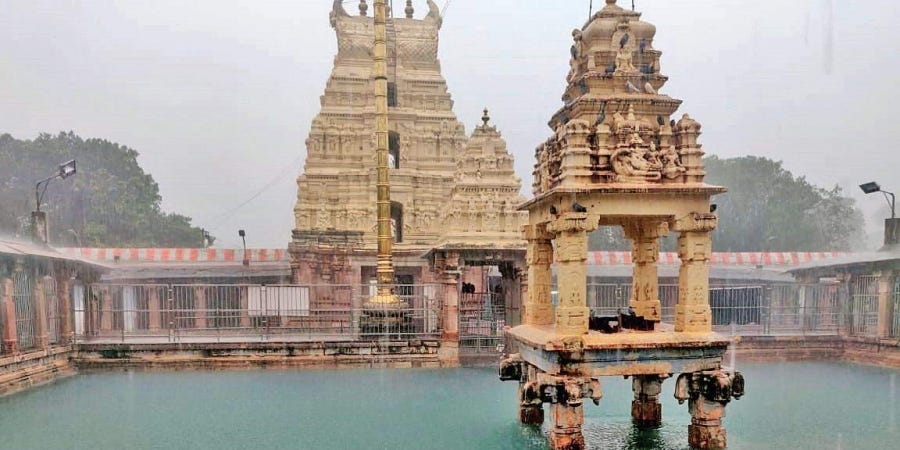

The Pushkarinis at Yaganti and Mahanandi are an engineering marvel, considering they are in a region which has very less rainfall, is usually hot and dry, yet they always have a steady flow of fresh water, even at the height of summer. he water at Mahanandi is especially famous for its healing qualities.
Devotees believe bathing in it purifies the body, while drinking it can aid health.Beyond ritual, the water sustains the fields around the temple, irrigating crops like rice and vegetables.
As per the Sthala Purana, there was a Rishi named Sillada living in the Nallamalas, a steadfast devotee of Shiva, performing penance with unwavering dedication.When Shiva appeared before him and asked for his wish, Sillada requested not wealth or power, but simply that Shiva remain with him always.
Shiva granted this in the form of a son,Mahanada, who inherited his father’s devotion and performed penance himself. Mahanada’s devotion became so profound that the temple and the region came to be sanctified in his name,Mahanandi, the abode of Shiva through the lineage of devotion.
When Shiva appeared before Mahananda, the lad asked for the boon to serve as his vahana. Shiva blessed him, saying that this place will be a holy Kshetra in your name, and you shall serve me as my vahana, as well as my close confidante.
Another Sthala Purana says that there was a king called Nanda ruling from there. One day some cowherds came to his court and told him about one of their cows going to an ant hole and a child coming out and drinking the milk. When the king went to the forest and observed the sight, he went closer, however the frightened cow ran away. That night Shiva appeared to him in a dream saying
“I was the boy in that ant hole, build a temple there for me, as also the 9 Nandi temples”
When King Nanda dug up the ant hole, he discovered a Swayambhu Shiva Linga, the self-manifested symbol of Shiva. To sanctify the site, he also dug out three Pushkarinis , Rudra Gundam , the largest, located inside the temple, with a mandapam at its center, Brahma Gundam, one of the outer tanks and Vishnu Gundam,the other outer tank.