

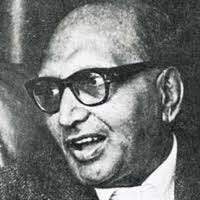
When one looks at the history of the Kakori Conspiracy, there are many an illustrious name associated with it, Ram Prasad Bismil, Ashfaqulla Khan, Chandrashekhar Azad, Rajendra Lahiri, Sachindra Bakshi to name some. Among those giants, was another name, overshadowed by them, and about whom not much is really known. But today if we are able to have some knowledge of the revolutionary movement, it was due to this man, who not just took part in the event, but also chronicled, the entire movement.
Manmath Nath Gupta, whose landmark book, They Lived Dangerously, looked at the freedom struggle from a revolutionary’s point of view. A freedom fighter, revolutionary, author, journalist, and political leader too.
He was born on February 7, 1908 in Varanasi, to Veereshvar Gupta. His grandfather Adya Prasad Gupta, was originally from Hooghly but migrated here long time back in 1880. Manmath spent his childhood in the Nepali town of Viratnagar, where his father worked as a school teacher for some time. Later when his father was transferred to Varanasi, he was admitted in the Kashi Vidyapeeth for further studies.
Manmath was drawn into the freedom struggle, when he was just 13, distributing pamphlets, calling for the boycott of the reception to Prince of Wales, Edward by the Kashi Maharaj. Arrested in the Gadolia area, he defiantly courted arrest and told the judge, he would not cooperate. Jailed for 3 months, on release he passed the Visharad Exam in Kashi Vidyapeeth. His meetings with other revolutionaries influenced his thinking, and he plunged into the freedom struggle.
He initially joined the Indian National Congress, however their moderate tactics, did not appeal to him much, and when Gandhiji called off the Non Coooperation Movement, due to the Chauri Chaura incident in 1922, he felt a lot disappointed. Gandhi’s unilateral decision, disappointed many others, and soon two groups, were formed, the liberal one with Motilal Nehru, CR Das and the revolutionary youth under Bismil.
Bismil along with Sachindranath Sanyal and Dr.Jadugopal Mukherjee, drafted the constitution of the new party, in 1924 which was called the Hindustan Republican Association(HRA). It was officially launched on 3 Oct 1924, in Kanpur, with Sanyal as the Chairman and Bismil as the District in charge for Shahjahanpur, he was also in charge of the Arms. In fact owing to his organizational abilities, he was given the additional charge of Agra and Oudh too. It had branches in Agra, Allahabad, Benares, Cawnpore, Lucknow, Saharanpur and Shahjahanpur. They also manufactured bombs in Calcutta – at Dakshineswar and Shovabazar – and at Deoghar in Jharkhand.
“We were called revolutionaries but we were just ordinary people ready to sacrifice our lives for our country”
Manmath joined HRA, and it was he who introduced Chandrashekhar Azad to the association. There was an interesting anecdote about how Azad nearly shot him once while learning how to shoot, and he was literally in tears, till Manmath pacified him.
Kakori
HRA’s main problem was the lack of funds, it was at such a time, Bismil, observed while travelling from Shahjahanpur to Lucknow, by train, that at each station, the Station Master bought bags of money and placed them in the guard’s carriage, there was no one to guard them. Kakori was a small village near Lucknow, and the 8 Down between Shahjahanpur and Lucknow used to pass through it daily.
Ram Prasad decided to stop the train at Kakori and take away the money bags, this was the genesis of the famous Kakori conspiracy. Manmath Nath Gupta, was one of the 10 who executed the plan, along with Bismil, Azad, Ashfaqullah, Rajendra Lahiri, Sachindra Bakshi, Keshab Chakravarty, Mukundi and Bhanwari Lal.
The revolutionaries stopped the train at Kakori on August 9, 1925 and looted the government funds. While there were no casualties, one passenger Ahmed Ali was shot dead unintentionally by Manmath, making it a case of man slaughter. With the British Govt, cracking down hard, Manmath was among those arrested from Varanasi. However being a teenager, he was not sentenced to death, instead he got 14 years RI. Released in 1937, he once again started writing against the Government. He was again arrested in 1939, and even spent time in the notorious Cellular Jail, before being finally released in 1946.
India would have attained independence in 1922 but for Gandhi’s bungling, as many competent writers have said, there is no doubt that on this occasion Gandhi had failed badly.
He was one prolific writer, with around 120 books in English, Hindi and Bengali to his credit. More than anything else, his book on the revolutionary movement They Lived Dangerously, is one of the most significant. It looks at the freedom struggle from the view point of the revolutionaries, and offers a much needed alternative narrative. He also wrote books on Azad, Bhagat Singh, Gandhi. He later joined CPI, and was quite active in politics for some time.
He also edited the Planning Commission’s magazine Yojana, the children’s magazine Bal Bharati and Aajkal, a literary magazine. His paper on Ram Prasad Bismil, was presented at the International Symposium on India and World Literature (IWL) held at Vigyan Bhawan, New Delhi on February 27, 1985.
He also appeared on an interview in the Doordarshan documentary, Sarfarosh ki Tamanna in December 1997, where he expressed regret for accidentally killing the passenger, due to which Bismil and Ashfaq were hanged. Manmath Nath Gupta passed away on a Deepavali night, Oct 26, 2000 in his Nizamuddin residence at 91. India should forever be grateful to this man, for his work, which was nothing less than a mirror to the Indian revolutionary movement, and provided the much needed alternative narrative.